
Our latest guide is here to provide you with a low-risk way to review and upgrade your compliance support. Just click below to download your free copy.
Download here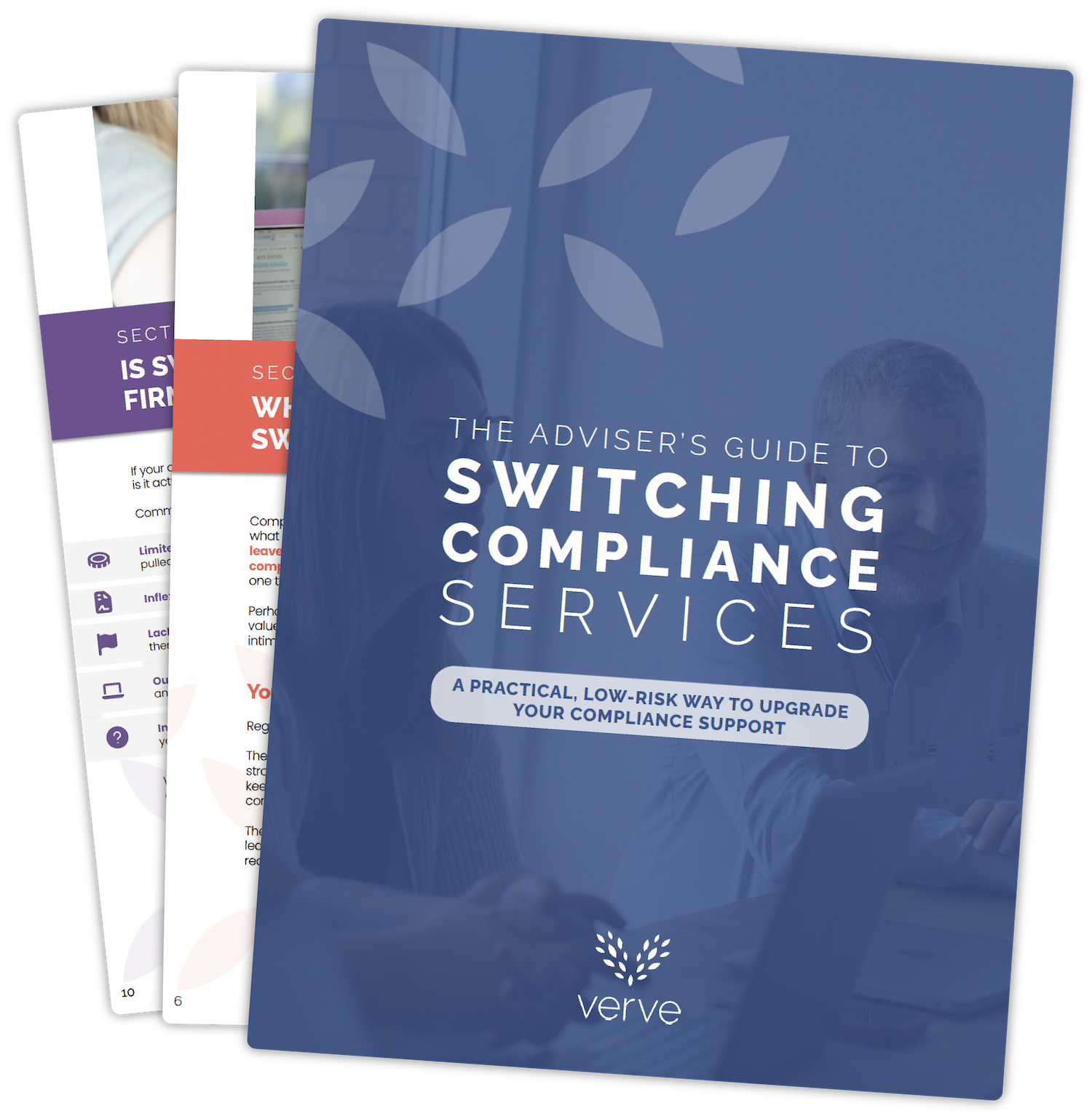
Consumer Duty didn’t arrive with a bang. There was no dramatic deadline day, no sudden regulatory shock. Instead, it quietly changed the role compliance plays inside advice firms, and that change is permanent.
Lots of firms are technically compliant: policies in place, returns filed and audits passed. But Consumer Duty has raised the bar on what “good” looks like, and for some firms, the gap between compliance in theory and compliance in practice is widening.
The question isn’t whether Consumer Duty applies to your firm… It does. The real question is whether your current compliance support is fit for this new era.
Consumer Duty isn’t about adding more boxes to tick. It’s about outcomes, evidence and ongoing oversight.
The FCA has been clear that it expects firms to:
That marks a shift away from periodic, backwards-looking compliance towards something far more continuous and embedded.
Compliance is no longer something you “check in on” once or twice a year. It now sits closer to advice design, client communications, training and governance than ever before.
Traditionally, compliance has often been organised around milestones like annual reviews, audits, file checks and returns.
Under Consumer Duty, we aren’t dancing to that rhythm.
Firms are expected to have:
When compliance support is built around static documents, spreadsheets and sporadic contact, that expectation becomes harder to meet.
One of the biggest changes Consumer Duty has introduced is the emphasis on explanation.
It’s no longer enough to show that you followed the rules. Firms must be able to demonstrate why decisions were taken, how risks were assessed and what action was taken when issues emerged.
This requires:
When compliance support is reactive or generic, that burden tends to land on advisers and operational teams instead.
Consumer Duty has created a slow build-up of pressure on traditional compliance approaches.
More information requests, more internal conversations and more time spent interpreting what the regulator expects all create a strain on systems that aren’t built to cope with it.
When compliance support isn’t proactive or clearly structured, that means:
This is where many firms find themselves with compliance that’s “fine”, but no longer fit for purpose.
Compliance support that works in a Consumer Duty world looks different.
It tends to be:
Instead of acting as a gatekeeper, good compliance support helps firms:
This isn’t about reducing compliance. It’s about doing it in a way that supports advisers, rather than slowing them down.
Many firms didn’t actively choose their current compliance arrangements. They inherited them, grew into them, or simply never revisited them.
Consumer Duty has exposed where those arrangements no longer align with how firms actually operate today.
Reviewing compliance support doesn’t mean something has gone wrong. It’s a sensible response to a regulatory environment that expects more clarity, more evidence and more ongoing oversight than ever before. What’s the bigger risk: switching, or standing still?
If Consumer Duty has prompted you to question whether your compliance support is still keeping pace, it’s worth understanding what switching actually involves.
Our Adviser’s Guide to Switching Compliance Services explains:
Download the guide and explore your options.

Maddie is Head of Compliance at Verve, with extensive experience and a passion for solving compliance challenges (and minimising frustration) for firms.

.png)
.png)
.png)
.png)
.png)